Roof repair in DeSoto, TX
A leak or damaged roof detail needs more than a cover over the visible spot. Find the opening, understand the surrounding roof and make the repair fit. Request a free roof inspection in DeSoto.
Free inspection. A roofer walks the roof when conditions allow.
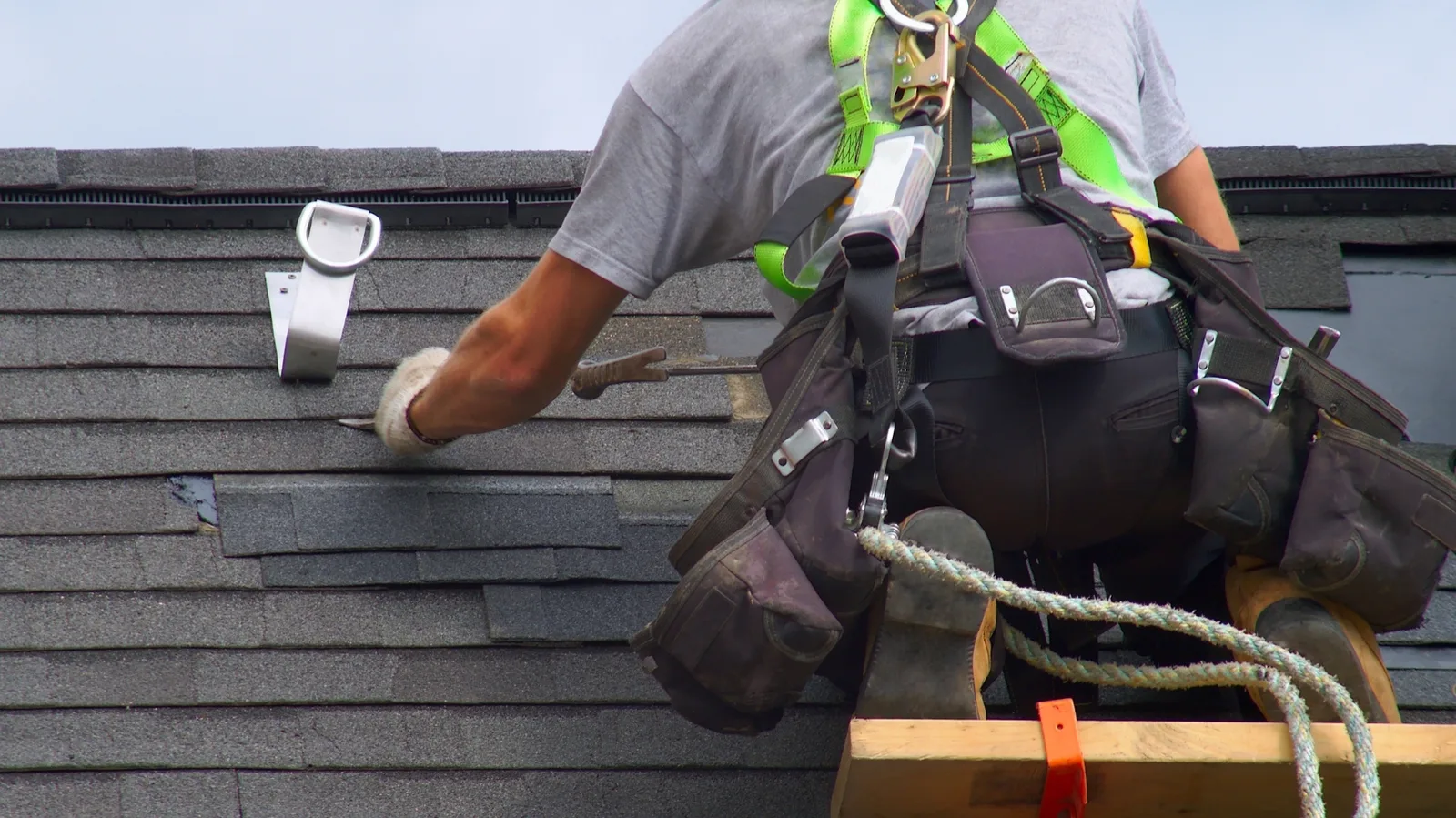
A DeSoto roof repair should solve the entry point
A dark ceiling patch can sit below a roof problem several feet away. Water travels along sheathing and framing before it finds its way into a room. Repainting the patch leaves that path untouched.
Roof repair starts at the covering and its connections. A roofer checks the likely entry details, then looks at whether the adjacent material can accept the repair. That second part matters: new flashing or a replacement shingle still has to join the existing roof correctly.
Tell us which room or roof area brought the problem to your attention. A free inspection puts the attention on the roof without requiring you to find the opening yourself.

What roof repairs in DeSoto can involve
Almost every repair comes down to one idea. A shingle roof sheds water because each piece overlaps the one below it, and a leak starts where that overlap is broken or where something pokes through it. The repair restores the overlap. Here is what that means for the parts that fail.
Missing, lifted or creased shingles
Wind breaks the adhesive strip that holds a shingle down, folds the tab back and creases it. A creased shingle has a broken mat even if it lies flat again, and it will not reseal. The repair slides a flat bar under the courses above, pulls the nails, removes the damaged shingles and weaves new ones in so the nails are covered and the laps line up.
What decides the size of the job is the shingles next door. If they bend, the repair stays the size of the damage. If they snap when they are lifted, more of them have to come out.
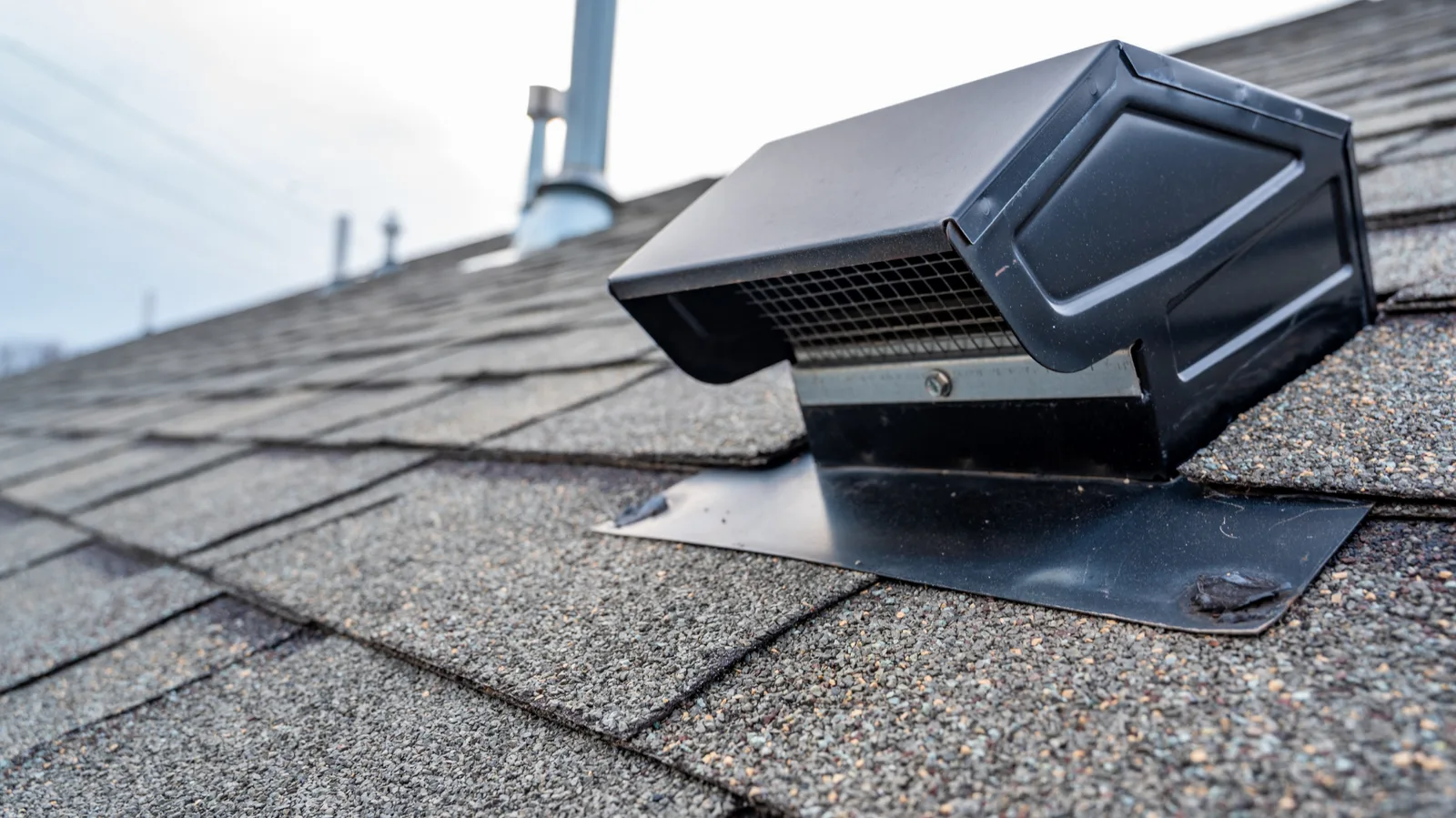
Pipe boots and roof vents
Every plumbing pipe through the roof wears a boot: a metal or plastic base with a rubber collar that grips the pipe. Texas sun dries that collar out until it cracks, and rain runs straight down the pipe into the attic. Replacing a boot means lifting the shingles above it, sliding out the old base, setting the new one so its upper edge tucks under the shingles and its lower edge sits on top of them, then sealing the nail heads. Box vents and turbine bases work the same way.
Flashing at walls and chimneys
Where a roof runs into a wall, each shingle course gets its own bent piece of metal, called step flashing, tucked behind the siding or under a counter-flashing cut into the brick. When those pieces rust, slip or were never there, water gets behind the shingles at the wall. A real repair takes up the shingles along the wall and resets the metal course by course. A bead of sealant across the top is a patch that the next hot summer opens back up.
Valleys
A valley carries the runoff from two slopes, so it sees more water than any other part of the roof. Leaks start where debris dams the flow, where the shingles were cut too close to the centerline or where the metal or membrane lining has worn through. Repairing one means opening both sides far enough to relay the lining and lap the shingles back over it, which is why a valley repair is a bigger job than its width suggests.
Roof edges
Along the eaves and rakes, a metal drip edge keeps water from curling back under the shingles onto the fascia board. When it is missing or loose, the edge of the decking stays wet and the fascia starts to rot. The repair resets or adds the metal, replaces the starter shingles over it and deals with any soft wood found along the edge.
The wood underneath
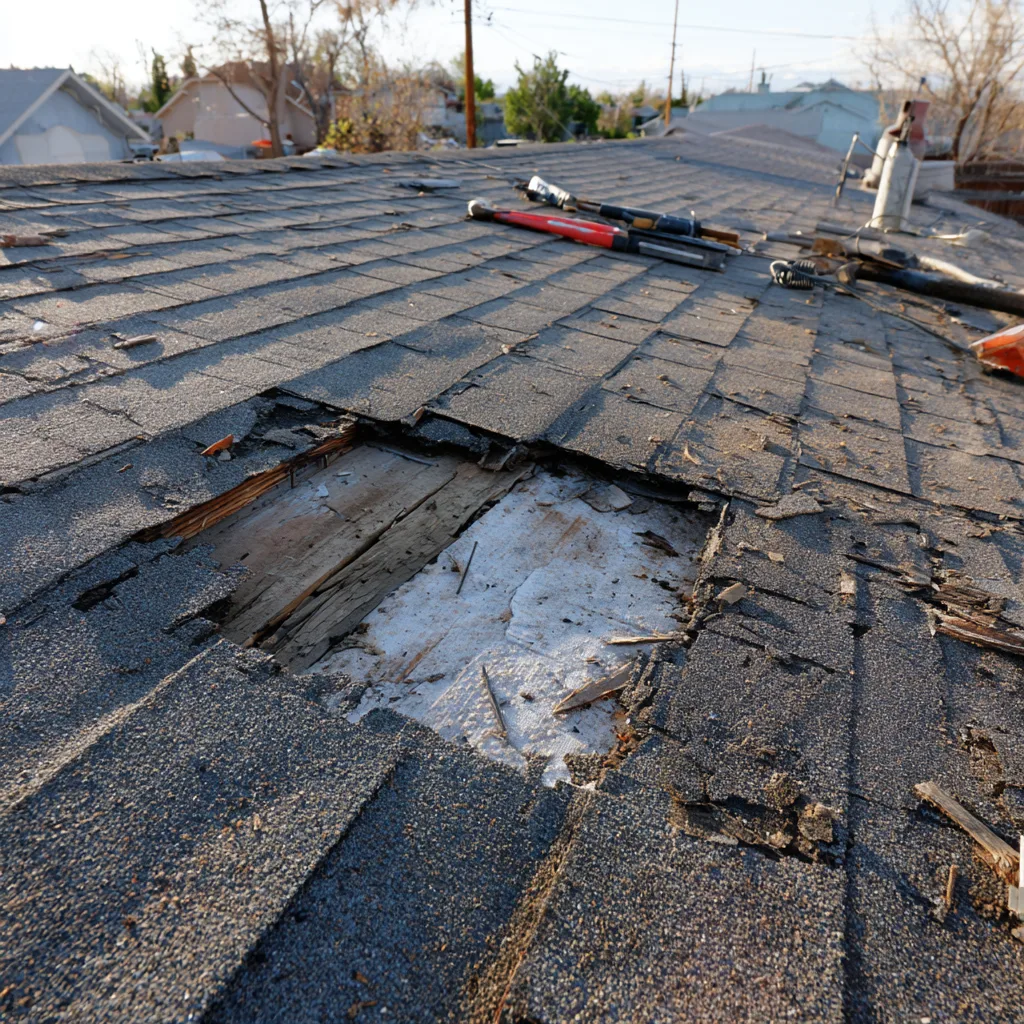
A leak that has run for a while softens the decking under it. New shingles can’t be nailed to wood that won’t hold a nail, so the damaged sheet or planks get cut back to the nearest rafters and replaced before the roofing goes back on. How much wood is bad can only be seen once the shingles over it are off.
How a DeSoto roof repair gets done
Repairs vary, but the order of the work doesn’t. Each step answers a question the next step depends on.
Find where the water gets in
The roofer starts from what you noticed and works uphill from it, checking the boots, walls, valleys and vents above that spot. The entry point is often not directly over the stain.
Test the shingles around it
Before anything comes apart, the surrounding shingles get lifted gently. If they flex, new work can tie into them. If they crack, the repair has to reach farther to find shingles that will hold.
Open the roof back to sound material
The damaged shingles, and the flashing or boot if that is what failed, come out. This is the moment of truth for the job: the underlayment and decking under the damage are visible for the first time.
Fix the wood if it needs it
Soft or delaminated decking is cut out and replaced so the new roofing has something solid to fasten to. If the wood is dry and firm, this step is skipped.
Rebuild from the bottom up
Underlayment goes back first, then the flashing or boot, then shingles, each layer lapped over the one below so water always runs onto the next surface and never behind it. Nails land where the next course will cover them.
Seal and check the tie-in
Exposed nail heads and the edges of the new shingles are sealed, and the repair is checked where it meets the old roof, because that seam is the part that has to last.
Until the shingles over a leak are lifted, nobody can say for certain how far the damage under them runs. A repair price describes the work that is visible and says how hidden wood damage will be handled if it turns up.
When a DeSoto roof repair needs a wider scope
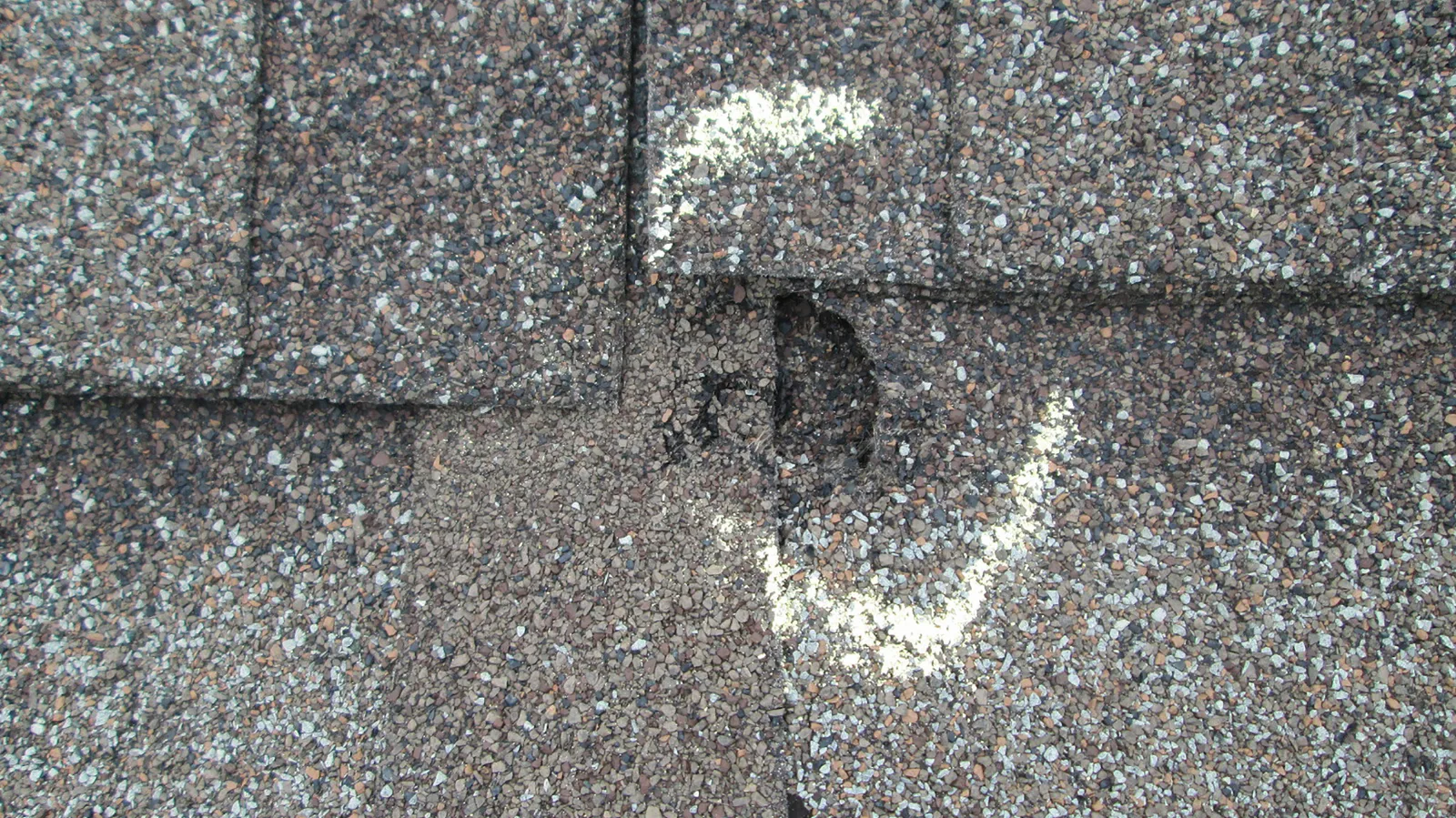
The first visible defect is a starting point for the inspection. It does not settle how much material needs to come off.
- The nearby covering still holds together
A localized repair can join sound shingles and restore the affected detail. The remaining roof stays in place.
- Opening the repair reveals more damage
Cracking shingles or deteriorated decking increase the work needed to make a sound repair. The important boundary is where the roof becomes suitable to tie into again.
- The same condition extends across slopes
A series of small patches leaves the wider deterioration in place. A replacement scope becomes useful when the condition is broad enough that isolated work will not address it.
What affects roof repair cost in DeSoto?
A repair price follows how much roof has to come apart and go back together. Two leaks that look identical from the living room can be very different jobs on the roof.
The part that failed
A cracked pipe boot or a handful of wind-damaged shingles in the open field of the roof.
A long run of wall flashing, a chimney, or a valley that has to be opened on both sides.
The shingles around it
Shingles that still bend, so the new work ties in right next to the damage.
Brittle shingles that break when lifted, which pushes the repair outward course by course.
What’s under the shingles
Dry, firm decking that only needs new roofing over it.
Soft or rotted wood that has to be cut out and replaced before anything else happens.
Getting to it
A one-story, walkable slope with easy ladder access.
A steep or two-story roof where safe footing and setup take real time.
Matching the roof
A shingle that is still made, in a color close to what is on the house.
A discontinued profile, where the closest available shingle has to fit the old courses and the color difference needs a conversation first.
That is why a repair price comes after a look at the roof, not before. The stain on the ceiling and the view from the driveway can’t tell anyone which of these jobs you have.
DeSoto roof repair FAQs
Should I wait for the next rain before requesting a DeSoto roof repair?
You can request an inspection as soon as you notice the change. More rain is not needed to make a missing shingle or a new ceiling stain worth checking. Keep people away from a sagging or bulging ceiling and avoid water near electrical fixtures.
Can you inspect a leak even if the shingles look intact?
Yes. The opening can be at a vent, wall, valley or another transition that is difficult to see from the ground. A roofer looks at those connections and the material around them.
Does a small roof repair need a DeSoto permit?
The city lists roofing among permit-required projects. Its general list does not establish an exemption for every small repair. The DeSoto permit guide points to Building Inspection for the answer that fits the work.
Will a repair make the roof look exactly the same?
Existing shingles weather over time, and a new shingle can look different even when its original color name matches. Compatibility and the water-shedding connection matter to the repair; the appearance of the replacement material belongs in the project discussion as well.
Get help with your DeSoto roof repair
Tell us where you noticed the leak or damage. A free inspection can establish which roof detail needs work and how far that work should extend.
Call (469) 523-0520