TPO roofing for DeSoto buildings
Plan TPO roofing around the deck, insulation, attachments and welded connections on your DeSoto building. Request a free roof inspection.
Free inspection. A roofer walks the roof when conditions allow.

A DeSoto TPO roof is more than a white surface
TPO is a thermoplastic sheet membrane used on low-slope roofs. Sheets and compatible details form a continuous water barrier through heat-welded connections. The system still depends on the roof deck, insulation, attachment and drainage beneath and around that membrane.
For an existing building, the first task is to identify what is there. A white roof can be TPO, another membrane or a coating. Records and examination help establish the covering and the details a repair would need to match.
Whether the question is a leak or a larger replacement, begin with how the building is used, where water appears and any known roof history. Those details help connect the rooftop scope to the spaces below.
Planning a TPO roofing system in DeSoto
TPO is the white sheet on top. The roof is everything from the deck up, and each layer is a decision.
Tear off or go over
If the existing roof is a single layer with dry insulation, a new membrane can sometimes go over it with a separator or cover board. If the insulation is wet or there are already two roofs on the building, the old material comes off. Building codes limit how many roof layers can stay, and covering wet insulation only postpones the problem.
How the membrane is attached
A mechanically attached system screws the sheet to the deck along its seams, and the next sheet is welded over the fasteners. It goes down fast and suits steel and wood decks. A fully adhered system glues the membrane to the board below for a smooth, tight surface with less flutter in the wind, but it takes more labor and the right weather for the adhesive.
Insulation and cover board
Rigid polyiso insulation goes under the membrane, and it can be tapered to build slope toward the drains on a dead-flat deck. A dense cover board on top of the insulation gives the membrane a firm backing against foot traffic and hail.
Membrane thickness
TPO comes in several thicknesses. Thicker sheet puts more material over the reinforcing fabric, which is what weathers away over the years. Where there is regular foot traffic or rooftop equipment that gets serviced often, the thicker sheet earns its cost.
Seams and flashings
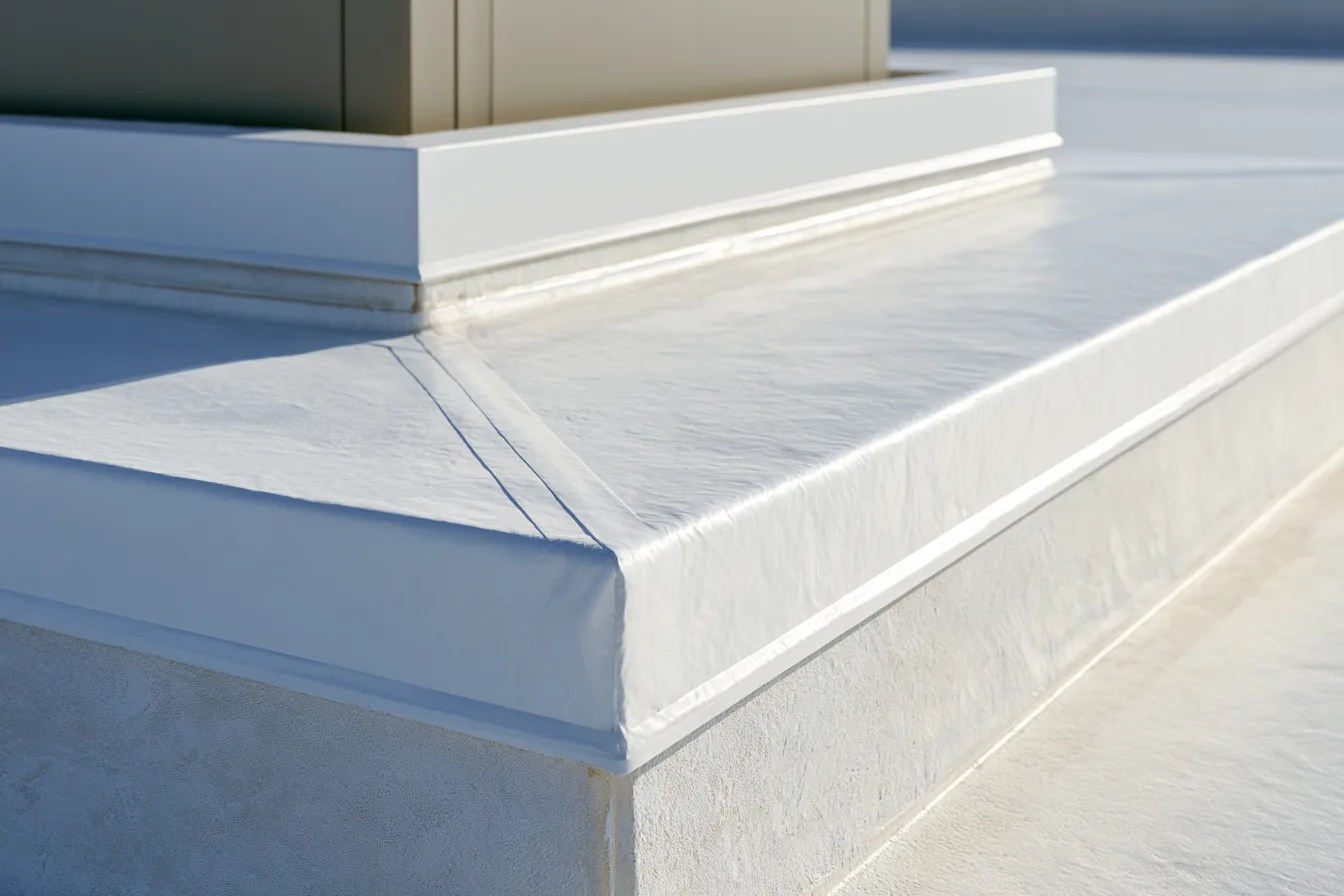
Sheets are welded together with hot air, which fuses them into one piece. Walls, curbs, pipes and drains are flashed with the same material, using preformed corners and boots where possible. These details take most of the skilled time on the job, and they are where leaks start when they are rushed.
Drainage and walk pads
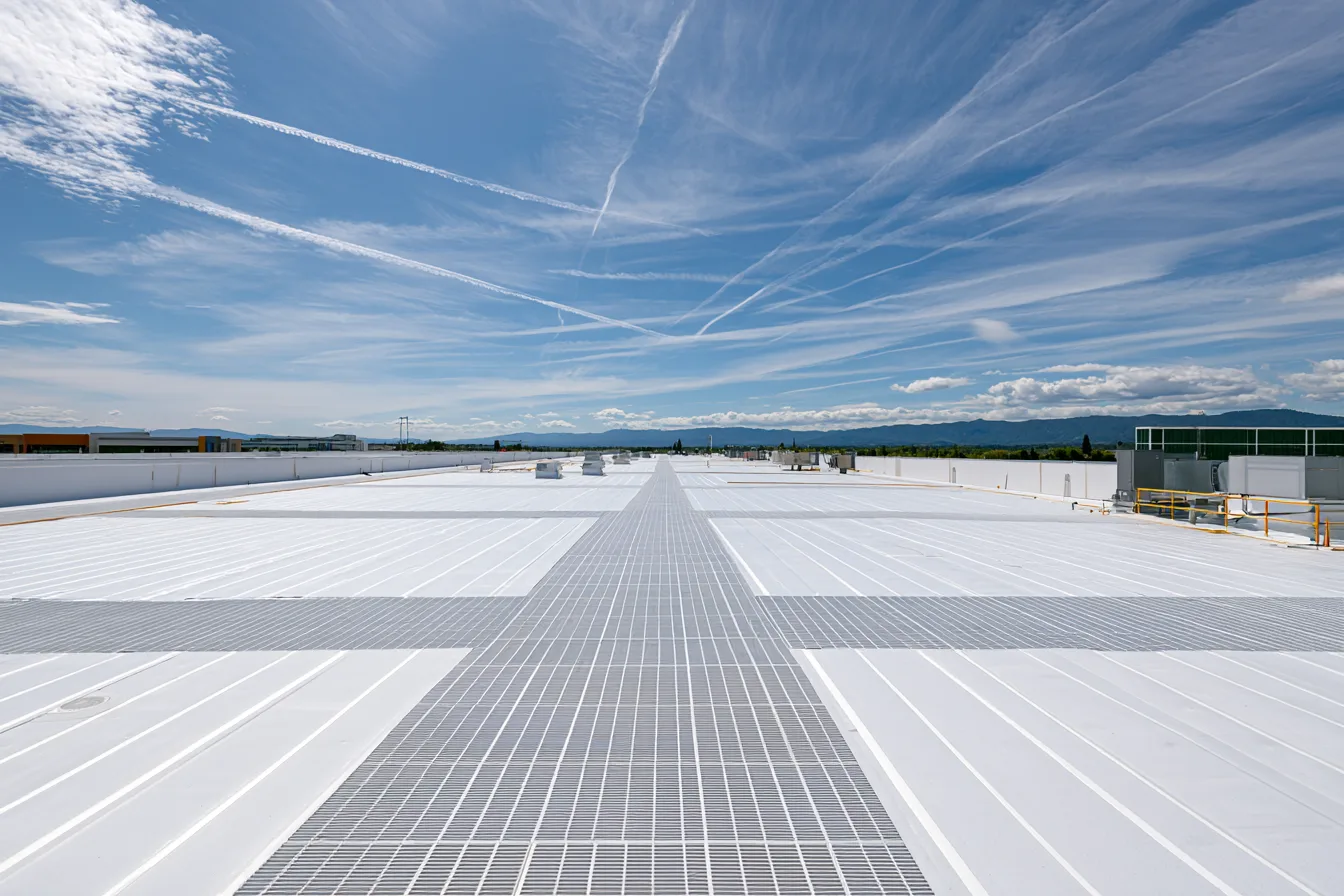
Drains and scuppers get new flashing, and low spots can be corrected with tapered insulation while the roof is open. Walk pads welded along the routes to HVAC units protect the membrane from the people who service them.
TPO seams and flashing carry the water barrier
A broad membrane field can look orderly while a seam edge or corner needs attention. Changes of direction around curbs and penetrations require compatible detail pieces and well-formed connections.
Carlisle’s test-weld and seam-probing guidance explains why thermoplastic seam quality is checked during installation and after welds cool. A surface that merely looks joined is not the whole verification.
How a TPO roof goes on a DeSoto building
A reroof on an occupied building is planned so the inside stays dry every night of the job.
Open only what can be closed the same day
The old roof comes off in sections sized to the day’s work. Each section is insulated, covered and tied in to the old roof before the end of the day.
Repair the deck
Rusted steel, rotted wood or damaged concrete found under the old roof is repaired before anything is fastened to it.
Lay insulation and cover board
Boards are staggered so joints don’t line up, and tapered pieces go where drainage needs help.
Roll out, attach and weld
Sheets are laid out, fastened or adhered, and welded at every seam. Welds are probed after they cool to find any spot that didn’t fuse.
Flash every interruption
Curbs, pipes, drains, parapets and edges are flashed and terminated. Edge metal or coping goes on last to lock the perimeter down.
Walk it
The finished roof gets walked seam by seam and detail by detail before it is called done.
Repair or replace an existing DeSoto TPO roof
- A localized failure in sound membrane
A compatible repair can address a specific puncture, seam or flashing problem when the surrounding material is suitable. The investigation still checks whether water has reached beyond the visible opening.
- Moisture below the covering
Wet insulation changes the repair boundary. The scope may need to remove affected material and rebuild that portion of the assembly before restoring the membrane.
- A wider system problem
Repeated open details, unsuitable support or broader deterioration can make replacement more useful than disconnected patches. A new system needs to resolve the underlying condition as well as the surface.
What changes the cost of a TPO roof in DeSoto
Size sets the baseline. These are the things that move the price per square foot up or down.
Tear-off or recover
One dry existing roof that can stay in place under the new membrane.
Wet insulation or multiple old roofs that have to be removed and hauled off.
Insulation
Matching the insulation that is there.
Adding thickness or a tapered layout to correct drainage.
Penetrations
A wide-open roof with a few pipes and drains.
Rows of HVAC curbs, skylights and conduit, each needing its own flashing.
Access
A single-story building with room to load from the lot.
A tall or landlocked building that needs a crane or careful staging around tenants.
DeSoto TPO roofing FAQs
Can you tell whether my roof is TPO from its color?
Color is not enough. Several membranes and coatings can look similar from a distance. The existing system needs to be identified before choosing repair materials.
Is a TPO roof the same as a roof coating?
No. TPO is a sheet membrane; a roof coating is liquid-applied over a suitable prepared roof. Their installation and eligibility questions are different.
How should rooftop equipment service be considered?
The roof scope should account for routine travel routes and equipment access. Appropriate walk surfaces and coordination help keep maintenance activity from concentrating directly on vulnerable details.
Can a TPO roof leak be repaired?
A sound system with a localized problem may support repair. The flat roof repair page explains how the leak path and underlying moisture affect that scope.
Discuss TPO roofing for your DeSoto building
Tell us the building use, roof concern and any known membrane or installation history. A free inspection can start the system-specific conversation.
Call (469) 523-0520