Flat roof repair in DeSoto
A low-slope roof leak needs a repair suited to the membrane, the failed detail and any moisture below it. Request a free commercial roof inspection in DeSoto.
Free inspection. A roofer walks the roof when conditions allow.
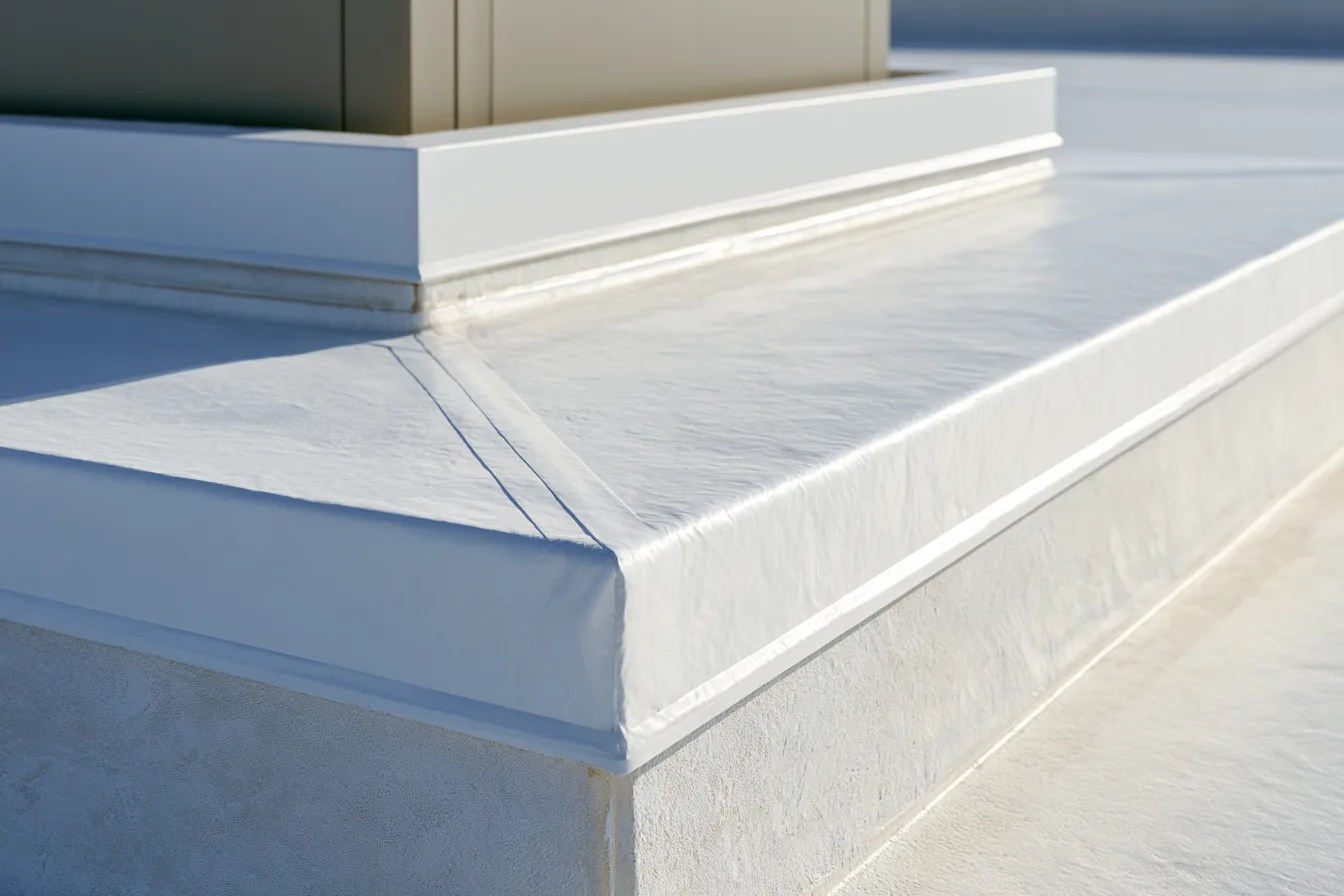
Find the water path on a DeSoto flat roof
“Flat roof” describes the roof’s shape, not the material covering it. A white sheet membrane, a rubber roof and an asphalt-based system can require different repair materials and connections. Identifying the assembly comes first.
The water path can also extend beyond the spot where it enters. A leak above one room may originate at a seam, curb or wall farther across the roof. The inspection connects the interior observation with likely rooftop details and the condition around them.
For an occupied building, access and interior operations matter too. Share where water appears, what is below that area and any rooftop equipment nearby. That helps put the repair in the context of the property.
Flat roof leak details on DeSoto buildings
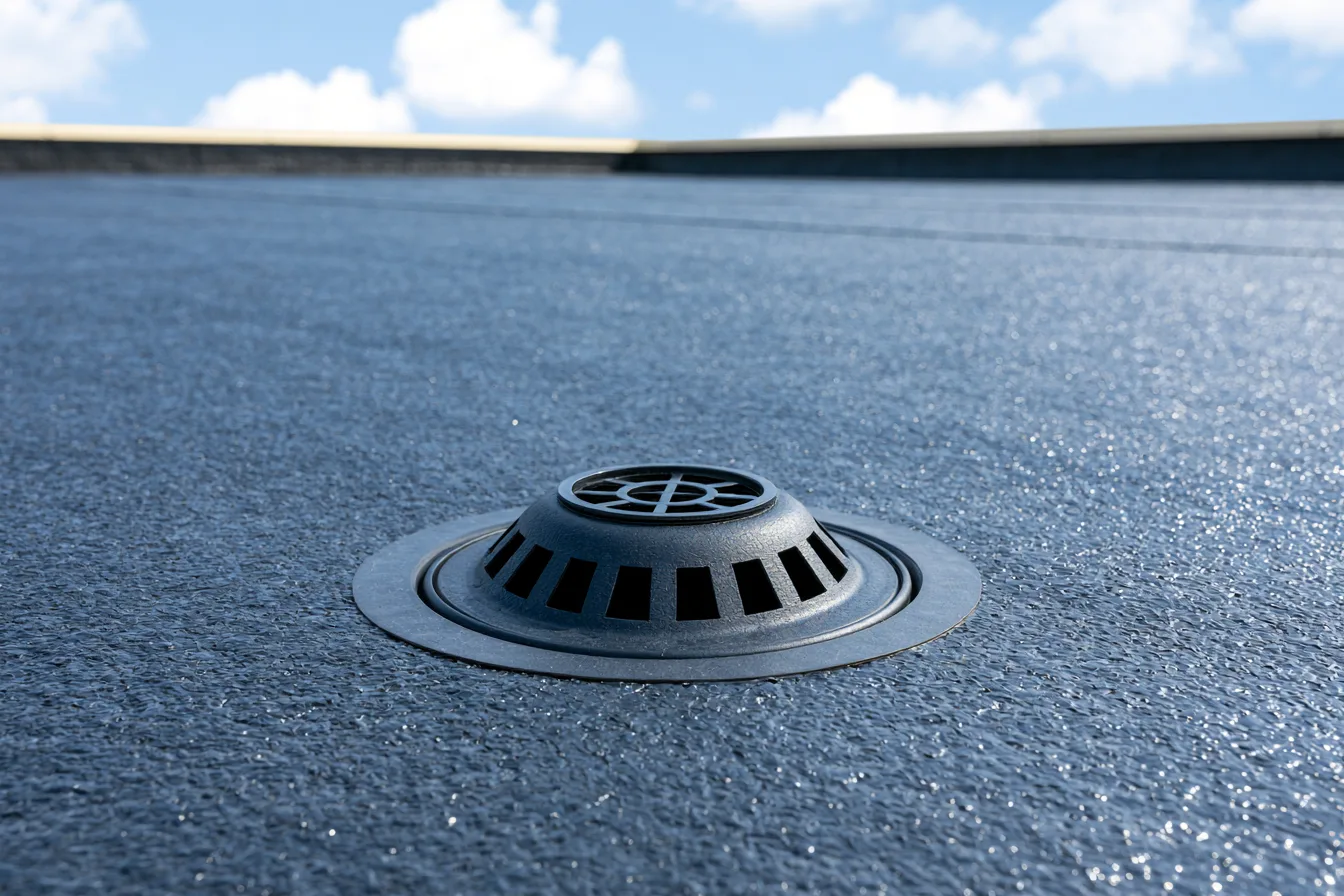
At the drain and the surrounding low area
An outlet needs a clear route for runoff and a sound connection to the covering. Debris at the drain and a failed flashing detail are different conditions; both can matter to a leak investigation.
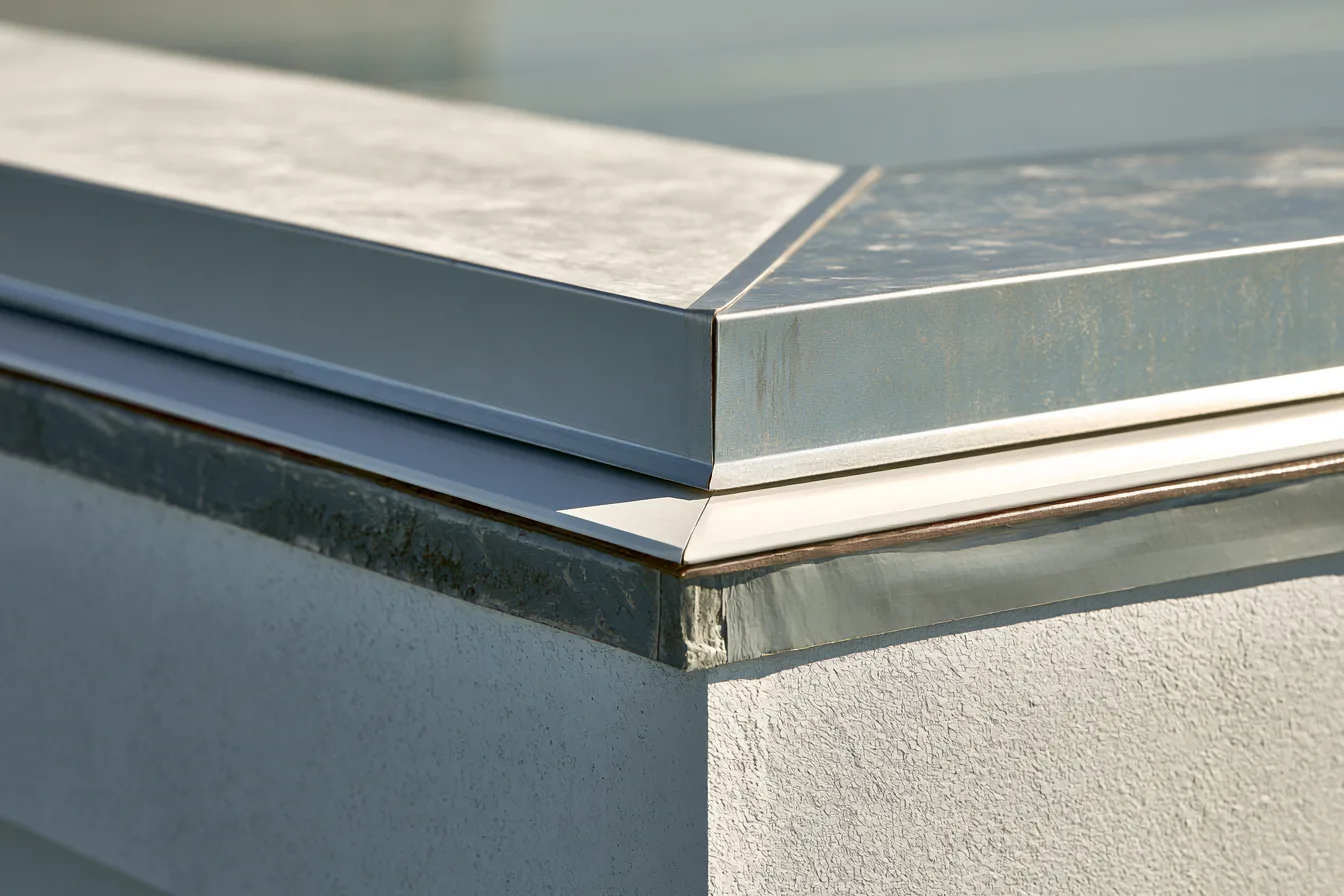
Where the covering turns up a wall
The membrane or flashing continues into a vertical detail beneath the wall termination. An opening here can let water bypass the roof field. The repair needs to resolve the overlap, attachment and termination together.
A DeSoto flat roof repair must fit the membrane
Patching a flat roof with the wrong material is how a small leak becomes a recurring one. The patch has to bond to what is there, and each membrane bonds differently.
TPO and PVC
These thermoplastic sheets are repaired by welding. The area is cleaned down to fresh membrane, a patch with rounded corners is cut from the same type of material and it is fused on with hot air. Older, weathered membrane can be hard to weld and may need extra preparation before a patch will take.
EPDM rubber
Rubber can’t be welded. The surface is cleaned and primed, and a patch or cover strip is bonded with seam tape or adhesive made for EPDM. Asphalt-based roof cement attacks rubber, so a black patch smeared on a black roof is often the cause of the next leak.
Modified bitumen and built-up roofs
Asphalt-based roofs are repaired with compatible sheets that are torched, cold-applied or set in mastic with reinforcing fabric. Splits, blisters and open laps are cut out or opened up and rebuilt in layers so the repair is as thick as the roof around it.
Roofs that have been coated
A coated roof has to be identified twice: the membrane underneath and the coating on top. Silicone in particular rejects most patching materials, so repairs on a silicone-coated roof use silicone-compatible products.
The first step is identifying the membrane, and you don’t need to know it before you call.
How a DeSoto flat roof leak gets found and fixed
On a flat roof, the drip inside and the hole outside can be a long way apart. The search is methodical for that reason.
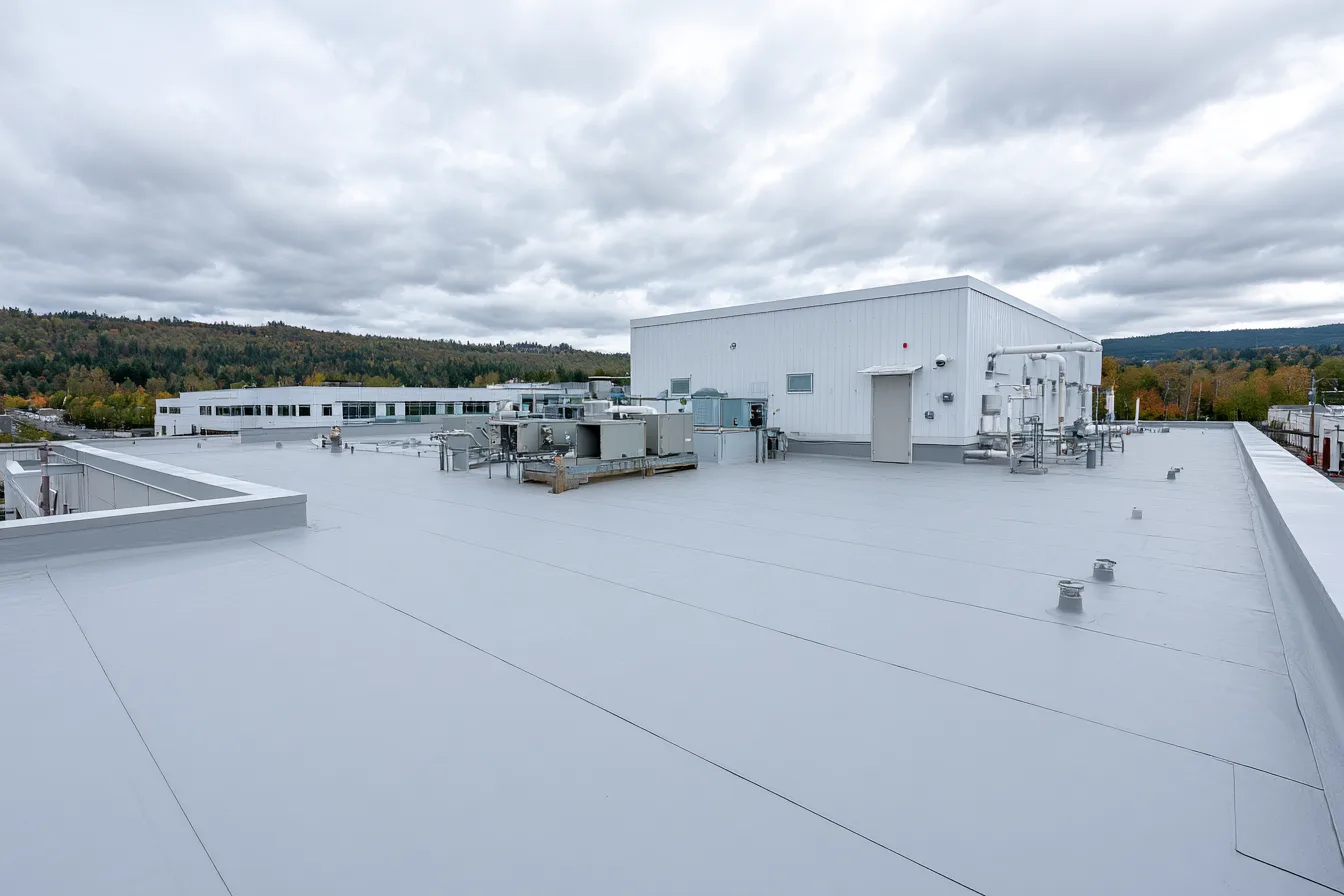
Map the leak inside
Note where water shows on the ceiling and what it is near: a wall, a column, a rooftop unit above. On a steel deck, water runs along the flutes before it drips, so the ceiling stain is a starting point, not an address.
Search the roof above and upslope
Seams, curb and pipe flashings, drains, scuppers and the base of the parapet within reach of that spot get probed and inspected. So do HVAC units themselves, because a clogged condensate line or a leaking unit housing looks exactly like a roof leak from below.
Check what is under the membrane
Spongy footing and blisters mean wet insulation. If the area is wet, the repair includes it.
Open it up and dry it out
The membrane is cut back, wet insulation comes out and new insulation goes in, fitted tight to the old.
Patch with the right material
The membrane is restored using the method its type calls for, with the patch extending well past the damage onto clean, sound material.
Fix the cause, not only the hole
If a clogged drain, a missing walk pad or a loose coping cap caused the damage, that gets dealt with too. Otherwise the same leak comes back beside the new patch.
When a DeSoto flat roof leak reaches below the covering
Water can remain below the top surface after a leak. Wet insulation or damaged support can extend the work beyond the hole or open seam that first drew attention. The retained material needs to be suitable before the covering is restored.
An inspection may indicate that further moisture investigation is useful. The important question is how much of the assembly needs correction, not just how large a patch would hide the visible defect.
If the discussion turns to a larger surface treatment, coating eligibility still depends on a suitable retained roof and completed repairs.
Signs the leak has spread below the surface
- Membrane that feels soft or spongy underfoot
- Blisters or ridges that were not there before
- Fasteners pushing up through the membrane
- Leaks that return in the same area after a surface patch
DeSoto flat roof repair FAQs
Is water on a flat roof always a blocked drain?
No. A blocked outlet is one possibility. Low areas, deck movement, insulation shape or changes around equipment can also affect drainage. The cause determines the work.
Can coating over a leak replace the repair?
A coating requires an appropriate prepared surface and repaired details. It should follow the leak investigation and any needed substrate work.
Can the building stay occupied during roof work?
That depends on the scope and the building’s operations. Access, noise, material movement, entrances and sensitive spaces should be considered when planning the work.
Where should I begin if I do not know the membrane?
Start with the leak location and building information. A commercial roof inspection request can begin without the product name.
Get help with your DeSoto flat roof leak
Tell us which part of the building is affected and any access or operating constraints. A free inspection can help define the roof-specific repair.
Call (469) 523-0520