Commercial roof coatings in DeSoto
A roof coating is useful when the existing assembly can support it. Explore preparation and eligibility for a DeSoto commercial roof, then request a free inspection.
Free inspection. A roofer walks the roof when conditions allow.
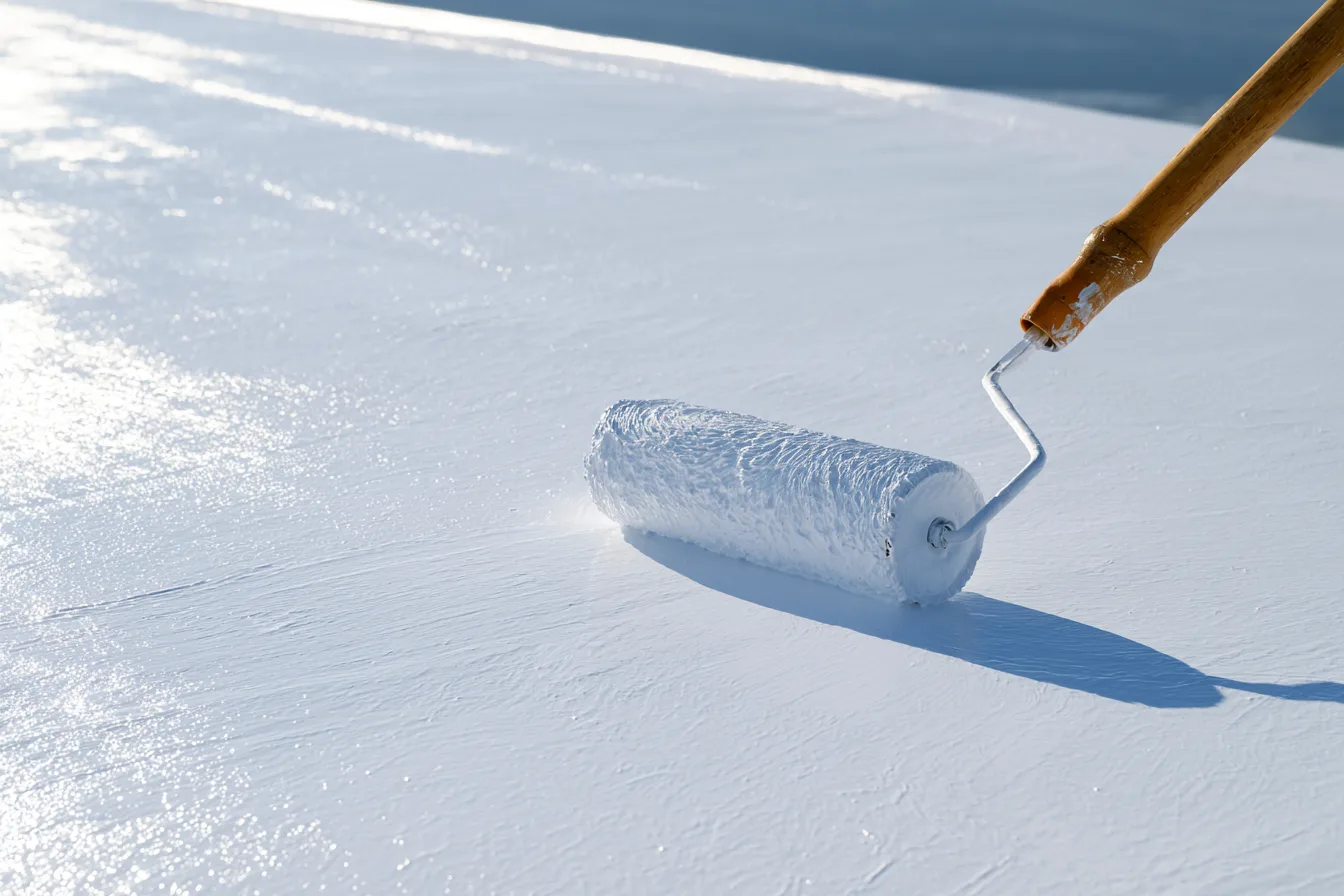
A DeSoto roof coating starts with a suitable existing roof
A coating adds a liquid-applied surface to an existing roof. Its value depends on that existing roof being worth retaining: sound enough to support the work, dry where it needs to remain, and compatible with the selected system.
That is why a coating discussion begins with the assembly and leak history. A bright new surface can cover a roof, but the scope still needs to address damaged material, open details and the way water leaves the building.
For a building owner, the useful question is what can be retained and what must be corrected first. A free inspection starts that conversation with the roof that is actually there.
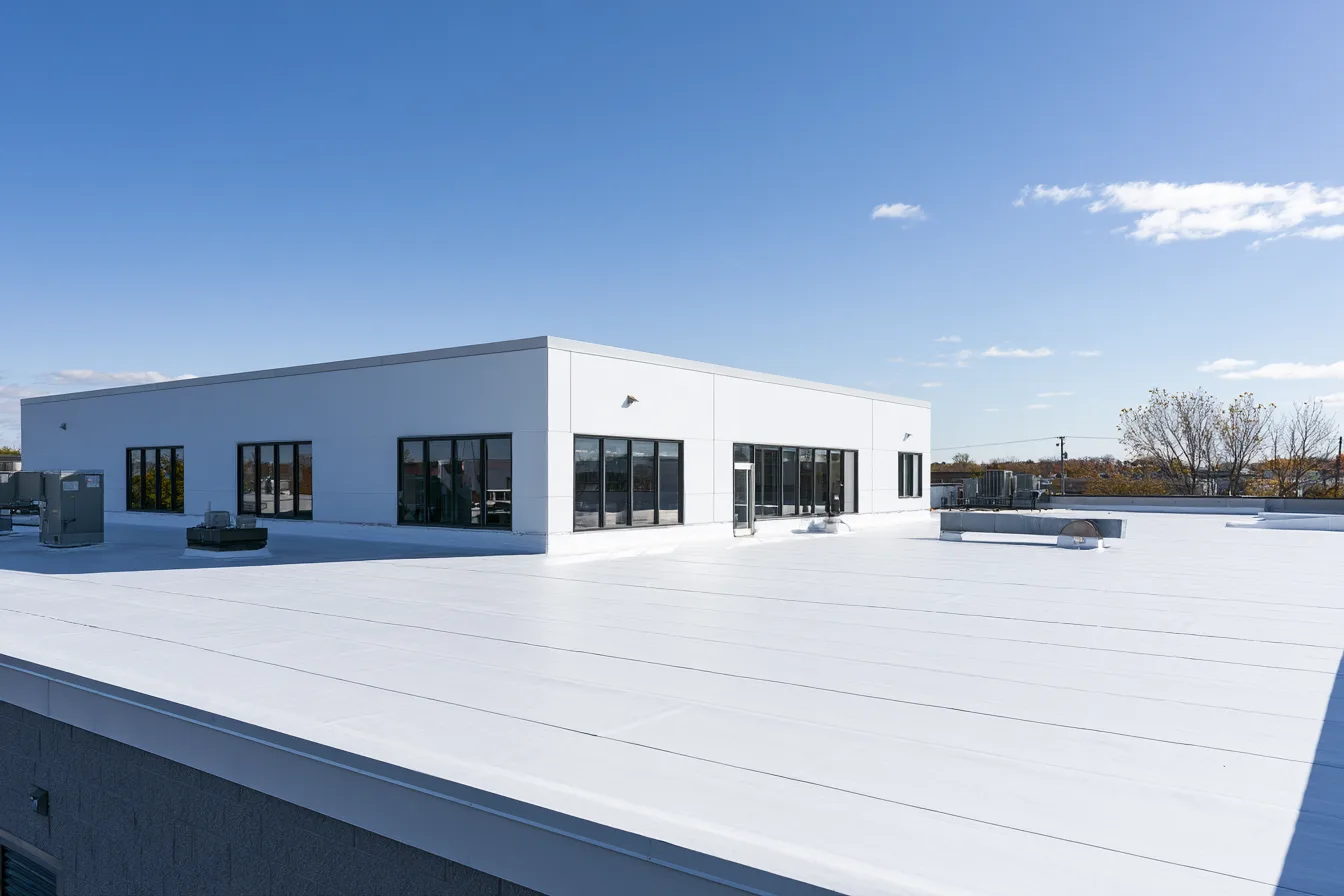
What changes coating eligibility on a DeSoto roof
- A sound roof with compatible surface
A suitable existing assembly can support restoration after the specified cleaning, detail work and adhesion checks. The proposed coating must fit the actual substrate, including any earlier coating.
- Repairs needed before restoration
Open seams, damaged flashing or localized wet material need their own corrective work. The preparation scope should identify these items instead of treating the topcoat as the repair.
- An assembly that needs broader work
Extensive moisture, unstable material or a failed supporting layer can change the decision. Removing and replacing affected roofing may be the useful path when a coating would retain the problem.
Preparation comes before coating a DeSoto commercial roof
The coating is the last and easiest part of a restoration. Whether it lasts depends on the steps before the first coat.
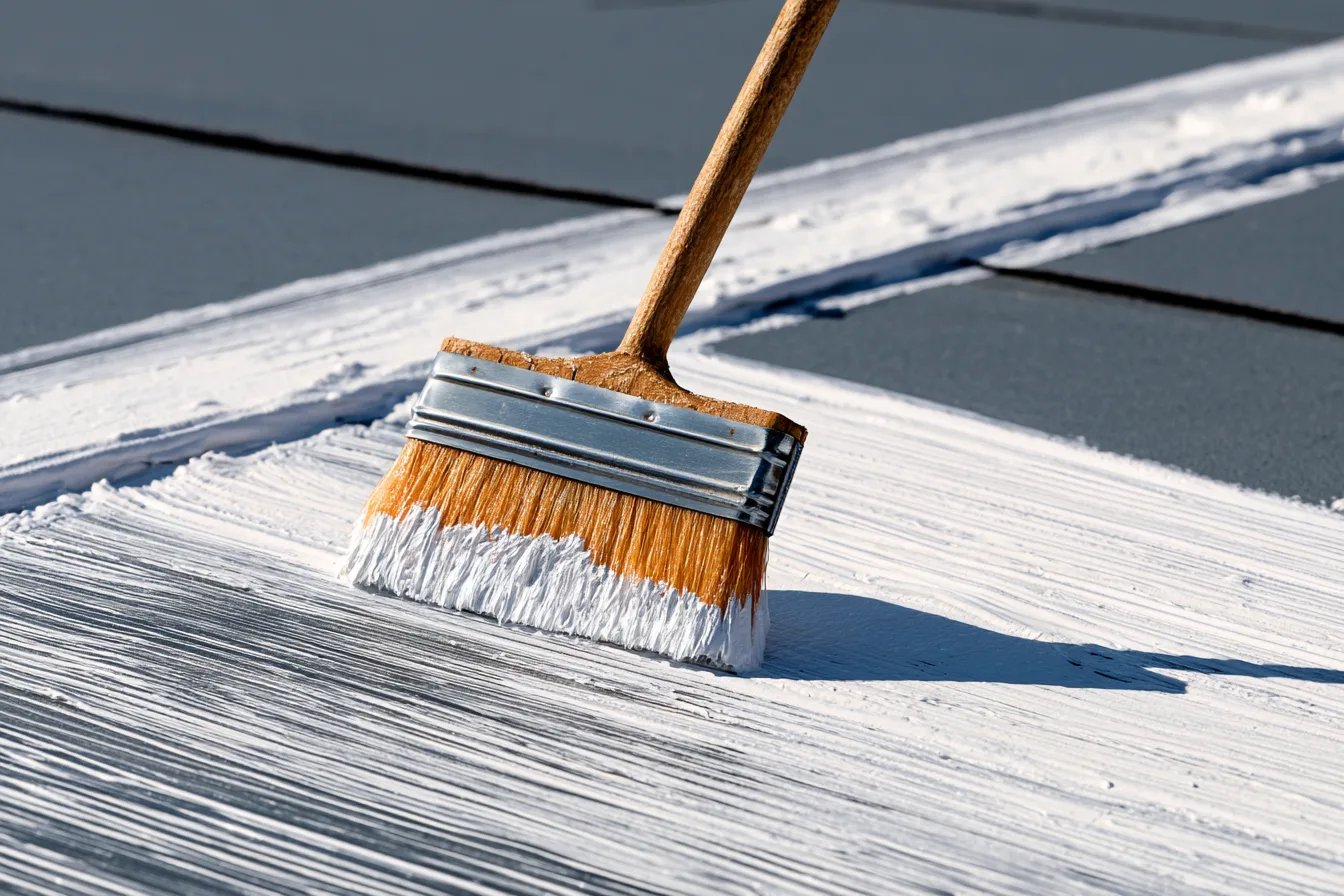
Find the wet areas
Identify the membrane and any earlier coating, then locate wet insulation. Soft spots, blisters and interior leak locations point the way, and a moisture survey or core cuts can confirm how far it goes.
Cut out what is wet
Saturated insulation is removed and replaced, and the membrane over it is patched with compatible material. Coating over wet insulation traps the water, and the blisters that follow take the new coating with them.
Repair seams, flashings and fasteners
Open seams, split flashings, backed-out fasteners and cracked pitch pans are fixed first. The coating isn’t the repair. It goes over the repairs.
Clean the roof
The surface is power washed to remove dirt, chalk and anything else that would sit between the coating and the roof, then allowed to dry completely.
Test adhesion and prime
A test patch shows whether the coating bonds to this particular surface. Some roofs need a primer or a bleed-blocking base coat before the finish coats will hold.
Reinforce the details
Seams, penetrations and transitions get a heavier treatment, often with fabric embedded in the coating, because those spots move more than the open field does.
Apply to the specified thickness
Finish coats go on at the coverage rate the manufacturer specifies, in weather that lets them cure. A coat stretched thin looks the same on day one and wears through years sooner.
Choose the coating system for the actual roof
Acrylic, silicone and other coating chemistries have different substrate and application requirements. Existing material, prior treatments, drainage and the manufacturer’s current specification guide that choice.
The GAF liquid-applied roofing manual separates substrate preparation, adhesion and system specifications. That sequence is useful for understanding a proposal: first establish the roof’s suitability, then define the preparation and coating system.
Acrylic
Water-based, bright white and highly reflective. Acrylics do well on roofs that drain freely. They don’t like sitting under water, so areas that pond are a problem for them, and they need mild, dry weather to cure.
Silicone
Silicone tolerates standing water better than acrylic does, which is why it gets considered for roofs with minor ponding. It picks up dirt over time and gets slick when wet. Once a roof is coated in silicone, very little besides more silicone will stick to it, so the choice narrows what can be done later.
Other systems
Urethane coatings are tougher under foot traffic and get used as base coats or in high-wear areas. Asphalt-based and aluminum coatings belong on certain built-up and modified bitumen roofs. The right one is whichever the manufacturer specifies for the roof that is actually there.
Standing water
A coating doesn’t change the shape of the deck or create slope. An obstructed drain and a low area in the roof need different fixes, and both should be dealt with before the coating decision is settled.
What a roof coating does and does not change
A coating is a good tool with a specific job. Being clear about that job is what keeps a restoration from turning into a second expense on top of a replacement.
A weathered surface
Seals and protects an aging membrane that is still attached and watertight.
Membrane that is loose, shrunken or splitting needs repair or replacement first.
Heat
A white reflective surface cuts the heat the roof absorbs in a Texas summer.
It adds no insulation. A thin or wet insulation layer stays thin or wet.
Leaks
Closes pinholes and minor surface cracking across the field.
Open seams, failed flashings and punctures are repaired with membrane materials before coating.
Water below the surface
Nothing. A coating only treats the top.
Wet insulation has to be found, cut out and replaced.
DeSoto roof coating FAQs
Can a coating fix wet insulation?
Wet insulation is part of the underlying assembly and needs to be addressed in the scope. Applying a coating above it does not remove the moisture or restore the damaged material.
Is silicone always better than acrylic?
The selected chemistry must fit the substrate, water conditions and manufacturer’s requirements. A universal ranking leaves out the roof it would be applied to.
Does ponding automatically mean the roof cannot be coated?
The cause, extent and system requirements matter. Drainage needs to be assessed and corrective work considered before the coating decision is settled.
Can an existing coated roof be recoated?
Possibly, if the retained roof and prior coating are suitable for the proposed system. Condition, cleaning and compatibility need to be checked again; an earlier coating does not settle the next application.
Find out whether a coating fits your DeSoto roof
Share the roof material if known, any earlier coating and the areas where water has appeared. Start with a free inspection to understand whether restoration belongs among the options.
Call (469) 523-0520