Roofing services in DeSoto
Roof repair, replacement, inspections and material choices for DeSoto homes, with a separate path for commercial buildings. Start with a free roof inspection.
Free inspection. A roofer walks the roof when conditions allow.
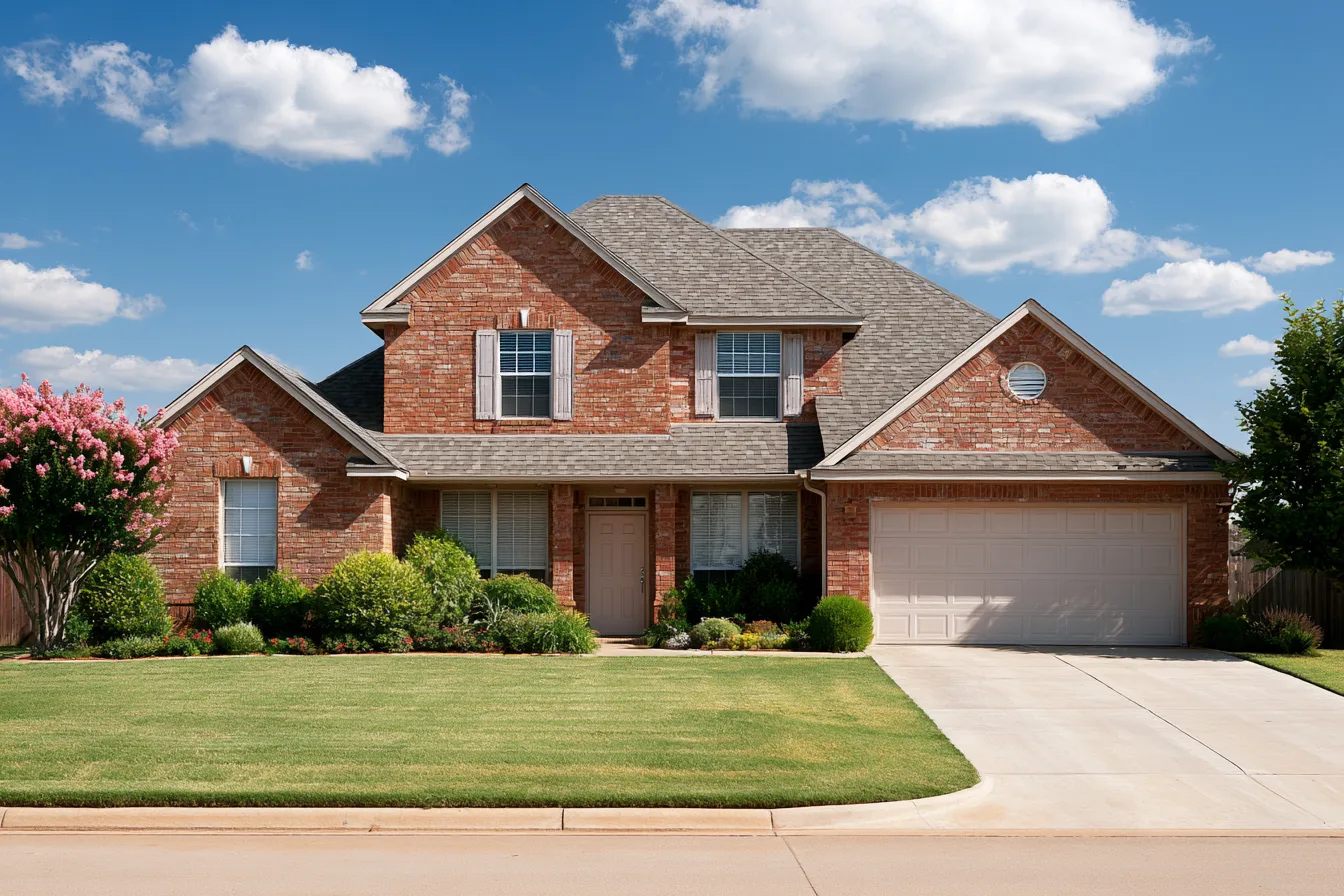
Roofing help for the work in front of you
A roof concern can begin with a ceiling stain, a shingle on the lawn or a project you have been thinking about for a while. Each is a useful starting point. You can ask for help before deciding how much work the roof needs.
The inspection puts the condition in view. A failed detail may call for a repair; deterioration across several slopes can lead to a replacement discussion. Material choices then follow the roof shape, the work and the look you want for the home.
Every service on this page is a different amount of work on the same kind of roof. The sections below explain how they relate, so you can start with the one that sounds most like your situation.

How roofing work in DeSoto fits together
Roofing jobs are not a menu of unrelated products. A repair, a replacement and an inspection all deal with the same layers: the shingles you can see, the flashing and vents that interrupt them, and the wood deck underneath. What the roof looks like up close decides how much of that gets worked on.
When one spot has failed
A roof can be in good shape and still leak. A rubber pipe boot splits in the sun, a piece of flashing pulls away from a wall, or wind takes a few shingles off one slope. When the shingles around that spot still bend without cracking, a repair opens the area, fixes the failed part and ties new material back into the old. The rest of the roof stays where it is.
Leak repair is the same kind of work with a harder first step. Water runs along the decking and rafters before it drips, so the stain on the ceiling and the opening in the roof can be several feet apart. The job starts by following that path back uphill to a boot, a wall, a valley or a vent.
- Roof repairShingles, flashing, vents and roof edges on a roof that is otherwise sound.
- Roof leak repairFollowing water from the room back to where rain gets in.
When you aren’t sure what the roof needs
Plenty of people get in touch without knowing whether they have a problem. The roof is getting older, a buyer’s inspector flagged something, or a storm came through overnight. A free inspection answers that. A roofer walks the roof when conditions allow, looks at the shingles, flashing, vents and edges, and tells you what is there. Sometimes the answer is that the roof is fine.
After hail or high wind, the inspection looks for specific things: bruised or fractured shingles, granules knocked loose, creased tabs, dented vents and flashing. A storm report tells you weather passed through the area. It can’t tell you what happened on your roof. Looking at the roof can.
- Roof inspectionsA free look at a new concern or an aging roof before you choose any work.
- Storm and hail damageWhat wind and hail physically change on a roof, and what that means for repair.
When the roof is worn out across its slopes
Repairs stop making sense when the trouble is everywhere. Shingles that have shed their granules, curled at the edges or turned brittle won’t seal to a new patch, and fixing one slope leaves the same wear on the others. Replacement takes the roof down to the wood deck, fixes any decking that has gone soft, and rebuilds the layers in order: underlayment, flashing, vents and the new covering.
It is a bigger job and a bigger bill, so the decision deserves a straight answer. When a repair will hold, a repair gets recommended. When repair bills start to stack up, it is worth pricing a replacement beside the next one. The repair or replace guide walks through that call, and the roof cost calculator gives you a planning range before anyone visits.
- Roof replacementTear-off, decking, underlayment, flashing and a new covering, in that order.
Choosing what goes on next
Once a new roof is on the table, the material question opens up. Asphalt shingles come in three-tab, architectural and heavier designer profiles, and impact-rated versions exist in more than one profile. Metal is a different system with its own panels, clips and trim, and it can cover the whole house or one section such as a low porch roof.
The roof itself narrows the choice. Slope decides which products are allowed, the shape decides how much cutting and flashing the job takes, and the look of the house matters too. Each material page explains what you are choosing between and what the choice changes about the work. The roof warranty guide explains what the labels on a shingle wrapper do and don’t cover.
- Shingle roofingProfiles, impact ratings and the parts that hold a shingle roof together.
- Metal roofingStanding seam, exposed-fastener panels and the details metal depends on.
From a free roof inspection to the work your DeSoto roof needs
An inspection is only useful if it turns into a clear description of work. This is how what a roofer finds on the roof becomes the job, and why two houses with the same ceiling stain can need very different amounts of it.
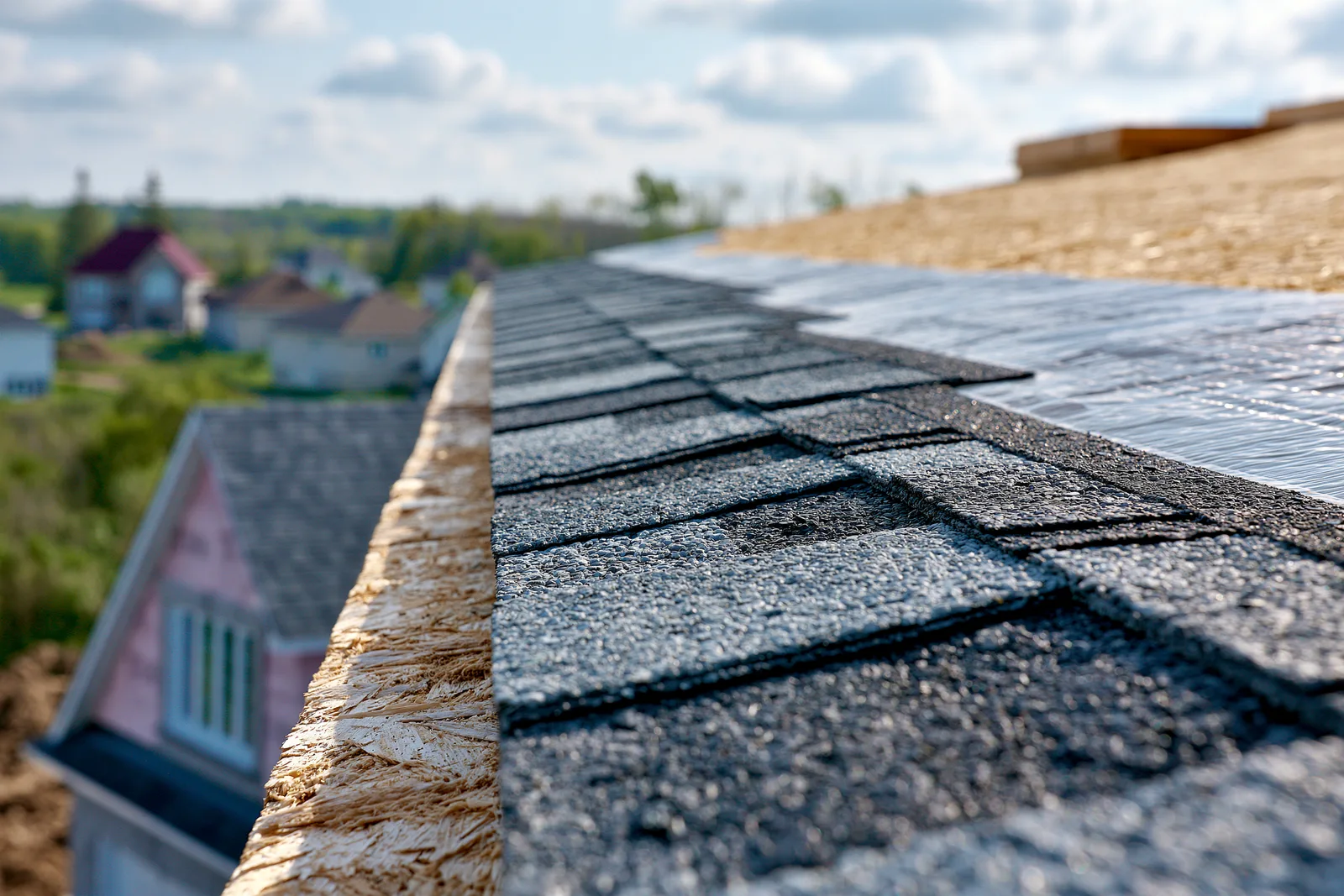
That is also why two prices for the same house can sit far apart. One may include new flashing and decking repairs while the other leaves them out. They are describing different jobs, and the description of the work is what makes a number mean something.
A split pipe boot, shingles around it still flexible
Replace the boot and the few shingles that have to come up to get at it. The new pieces lap into the old ones, and everything else stays put. This is about as small as roof work gets.
Flashing pulled away where a roof meets a wall
The shingle courses along that wall come up so the flashing can be reset piece by piece under the siding or counter-flashing. A three-foot run beside a dormer and a twenty-foot run along a second story are the same repair at very different sizes.
Shingles that crack when they are lifted
New material has to be nailed and sealed into old material that can take it. When the surrounding shingles break instead of bending, the repair area grows until it reaches shingles that will hold. If that condition shows up on every slope, a replacement gets priced beside the repair.
A soft spot underfoot
Soft decking means water has been getting in for a while. How far the rot runs can’t be seen until the shingles over it come off, so that part of the job is described as an allowance: the known work is priced, and wood found bad after opening is handled at a stated rate.
Granule loss, curling and exposed mat on every slope
This is a worn-out roof, not a damaged spot. The work is a full tear-off, a deck check, new underlayment, new flashing and vents where the old ones are spent, the new covering, disposal and the city permit.
Nothing wrong
A roof in good shape gets called exactly that. You’ll know what was looked at, and you can stop wondering about it.
Commercial roofing has its own set of decisions
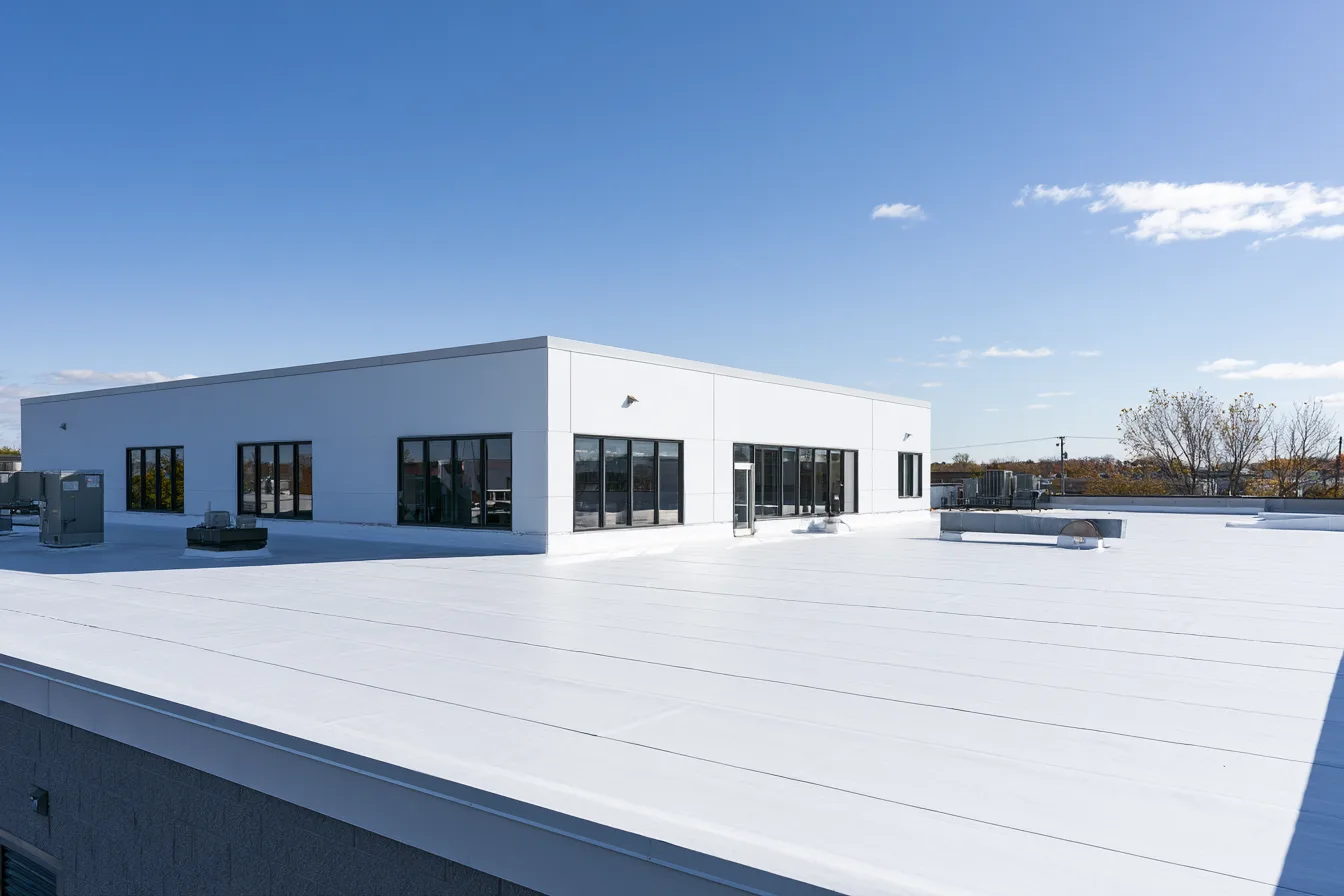
A low-slope commercial roof works differently from a shingle roof. Water doesn’t run off it quickly, so everything depends on a continuous membrane, sealed seams and drains that stay open. The roof is also part of how the building operates, with tenants underneath, HVAC units on top and deliveries at the dock.
If you own or manage a building in DeSoto, these are the conversations that come up. Each one has its own page.
Finding and fixing a leak
On a flat roof, water can travel between the membrane and the insulation and show up inside a long way from where it got in. The search concentrates on the places where the membrane is interrupted: seams, the flashing around pipes and rooftop unit curbs, drains and scuppers, and the turn-up at the parapet wall. The repair has to match the membrane that is there. TPO is heat-welded, EPDM rubber is primed and taped, and modified bitumen has its own patch method. Flat roof repair covers the leak search and what happens when the insulation underneath is wet.
Restoring a sound roof with a coating
A coating is a liquid-applied layer over a roof worth keeping. It makes sense when the membrane is aging but the insulation below is dry, the seams can be repaired first and the coating is compatible with the surface. It makes no sense over wet insulation or loose membrane, because the coating seals the problem in. Roof coatings explains how that gets decided and what the preparation involves.
Replacing the system
When moisture has spread through the insulation or the membrane is failing across the field, patches and coatings stop being honest options. A new single-ply roof means deciding how it attaches to the deck, what insulation goes under it, how the edges and curbs are flashed and whether drainage gets corrected while the roof is open. TPO roofing walks through those choices.
Working around the building
A commercial job is planned around the people under it. Where materials get loaded, which entrances stay open, when noisy tear-off can happen and how rooftop equipment stays in service all belong in the conversation from the first visit. Tell us how the building runs and the roofing plan can account for it.
Start with a free roof inspection in DeSoto
Tell us about the property and what you want to resolve. A roofer can walk the roof when conditions allow and help connect the concern to the work.
Call (469) 523-0520