Standing water on a DeSoto commercial roof: what it means
Water remaining on a low-slope roof after rain deserves investigation through the building’s authorized roof-access arrangements. A shop on Hampton Road and a distribution building along I-35E may have different drainage layouts. Debris at an outlet, a low area or a changed equipment detail can call for different work.
DeSoto Roofing Group is a useful starting point for that building question. Request a free roof inspection and tell us where the water sits and how the building runs.
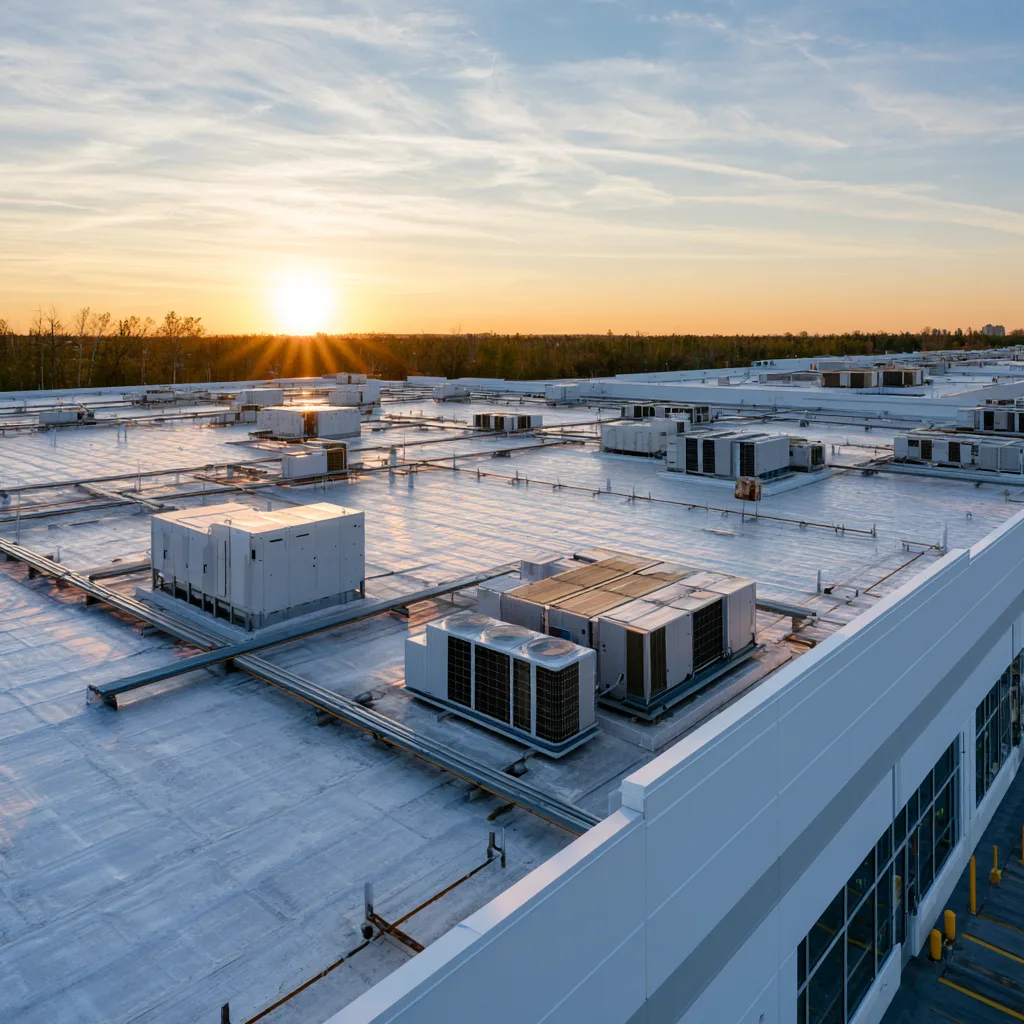
Where the water on a DeSoto roof is supposed to go
A low-slope roof still has a route: toward internal drains, scuppers through the parapet, or the edge, following the shape of the deck and the tapered insulation on top of it. A drain that looks close to a puddle can still sit an inch above the low point, and on a large industrial roof an inch is a lot of water.
Leaves and gravel at a strainer are the easy case. A raised seam, a curb added for a new unit, or insulation that has settled under foot traffic can hold water just as well, and none of those clears with a broom.
Rooftop units change the roof around them
Equipment service brings people and tools onto the roof, and a replacement unit can change the curb or support arrangement. Check the surrounding membrane, flashing and drainage where damage or water collection is observed rather than assume every visit has harmed the roof.
Clearing a drain restores flow where debris was the cause. It does nothing for a low area elsewhere in the assembly, which is why the inspection separates a maintenance task from a roofing or drainage correction.
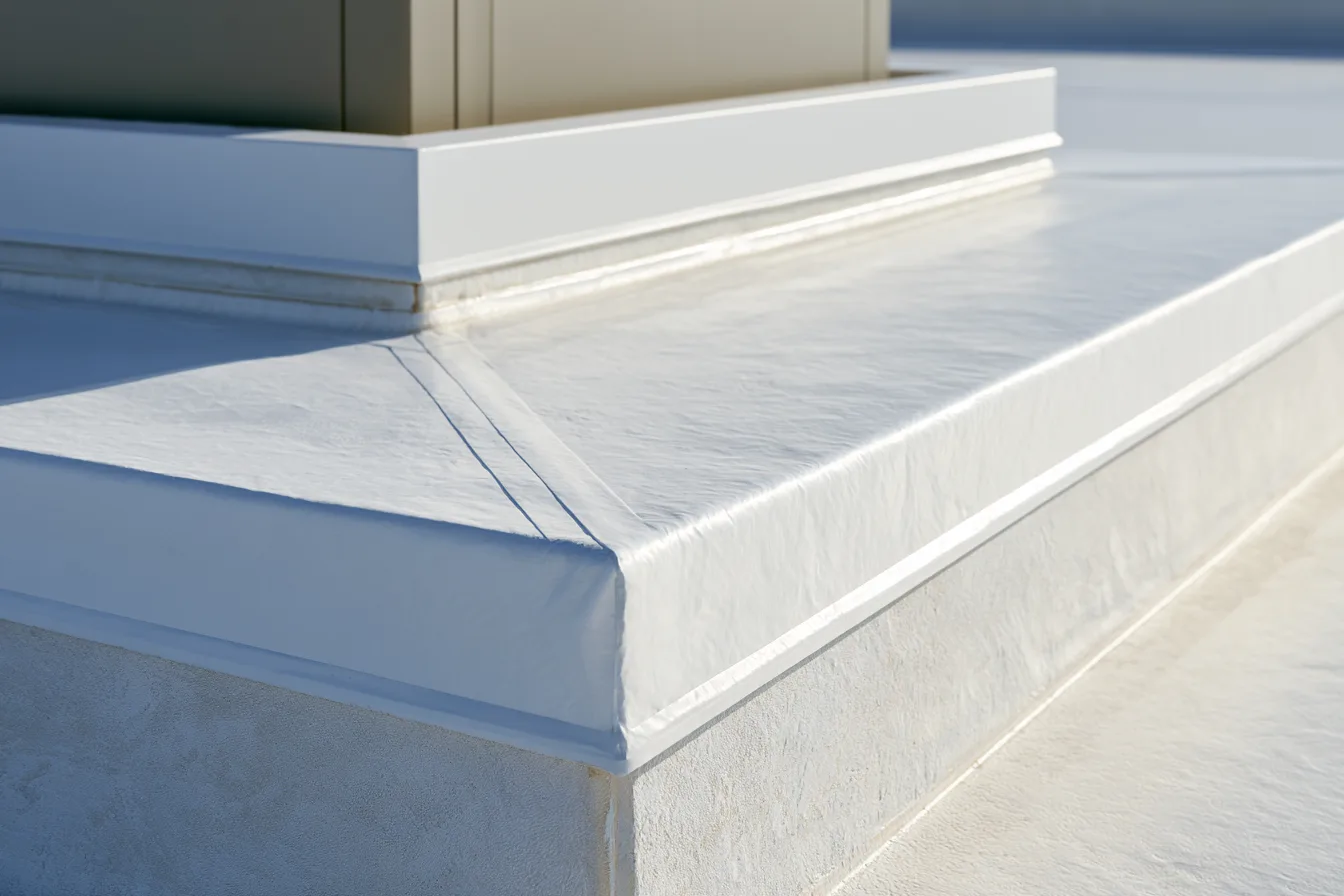
Why a coating will not fix a puddle
A coating follows the prepared surface; it does not create drainage slope or dry wet insulation underneath. Products have different water-exposure limits. Establish why water remains and the corrective work required before choosing a restoration system.
Manufacturer preparation rules, such as those in the GAF liquid-applied roofing manual, set the moisture and adhesion conditions a coating needs before it is worth applying.
What to tell the roofer about the wet area
Where the water sits, the nearest drain or scupper, whether a leak inside follows the same pattern, and when the roof can be reached without disrupting the floor below. Keep roof access to the building’s own arrangements.
The flat roof repair page explains how the membrane and the condition beneath it shape a repair. If a restoration is on the table, the roof coatings page covers the preparation and the moisture test that decide eligibility.
Take a closer look at your commercial roof
Tell us where the water sits, whether anything shows inside and how the building runs. A free inspection sorts a blocked drain from a low spot from a failed curb.
Call (469) 523-0520