Why a ceiling stain can sit away from the roof leak
The first sign of a roof leak is often inside the house. Yet the ceiling patch can be several steps removed from the opening that admitted the water. Understanding that route explains why a roof investigation looks beyond the spot directly above the stain.
DeSoto Roofing Group can help you bring that concern back to the roof. Request a free roof inspection and tell us when the stain appeared.
Water follows a route before it reaches the room
Roofing is designed to move water down and off the building. When water gets past the covering, the route changes. The underside of the deck, a framing member or another surface can carry it sideways or down-slope before it drops onto insulation or a ceiling.
That means a small indoor mark can come from an opening some distance away. It also means the appearance of the stain does not establish the amount of roofing that needs repair. The investigation has to connect the result inside with the failure above.
Connections interrupt the broad roof surface
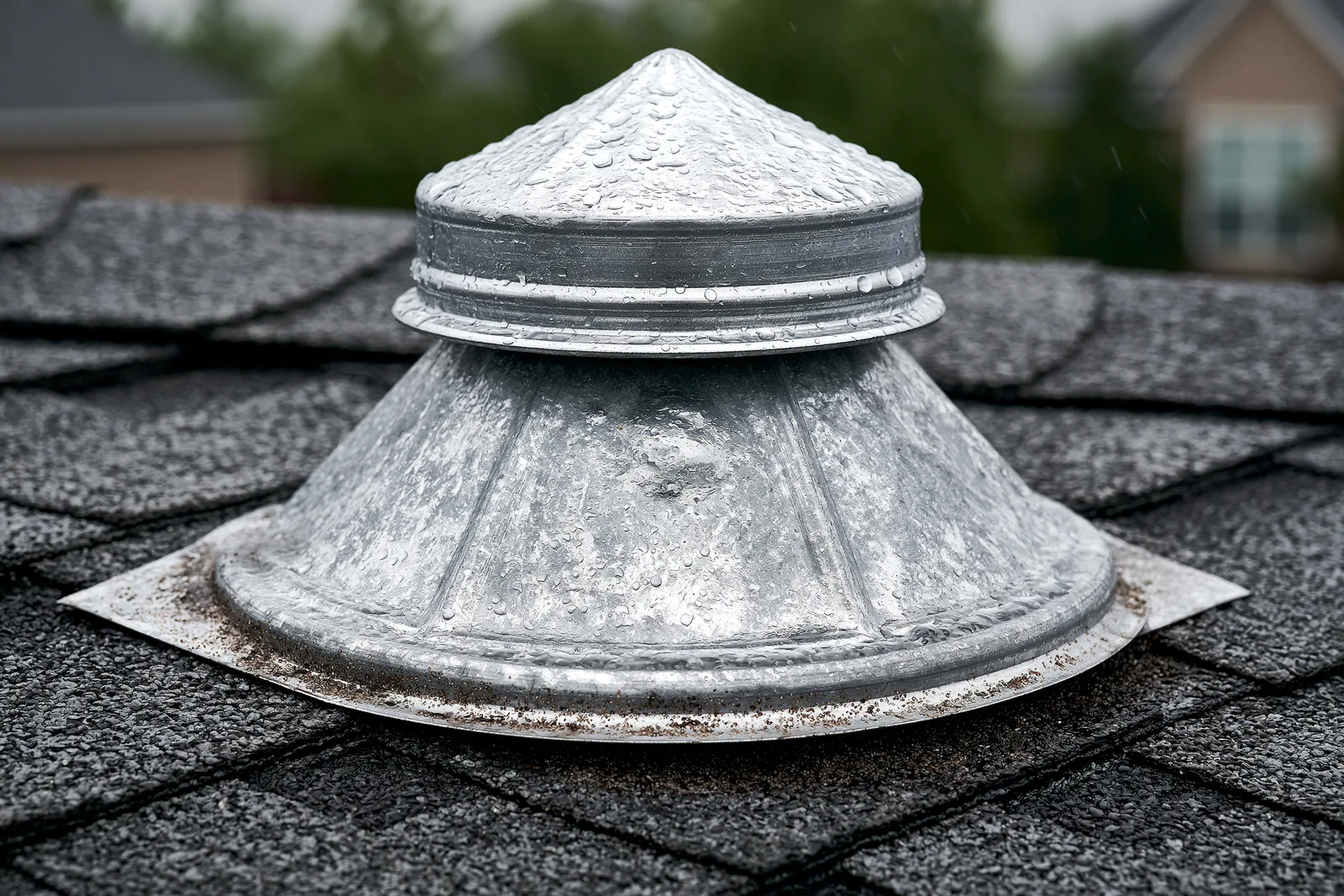
A pipe, wall or change of slope interrupts the broad pattern of shingles. Flashing and overlapping materials carry the water past those interruptions. A failed seal or separated connection can create an entry point while the neighboring shingles look ordinary.
The roof’s layout helps a roofer decide where to look. A valley above the room, an addition meeting the main house or a nearby wall junction can all be relevant. They are investigation clues, not automatic diagnoses.
What the timing of a stain can tell you
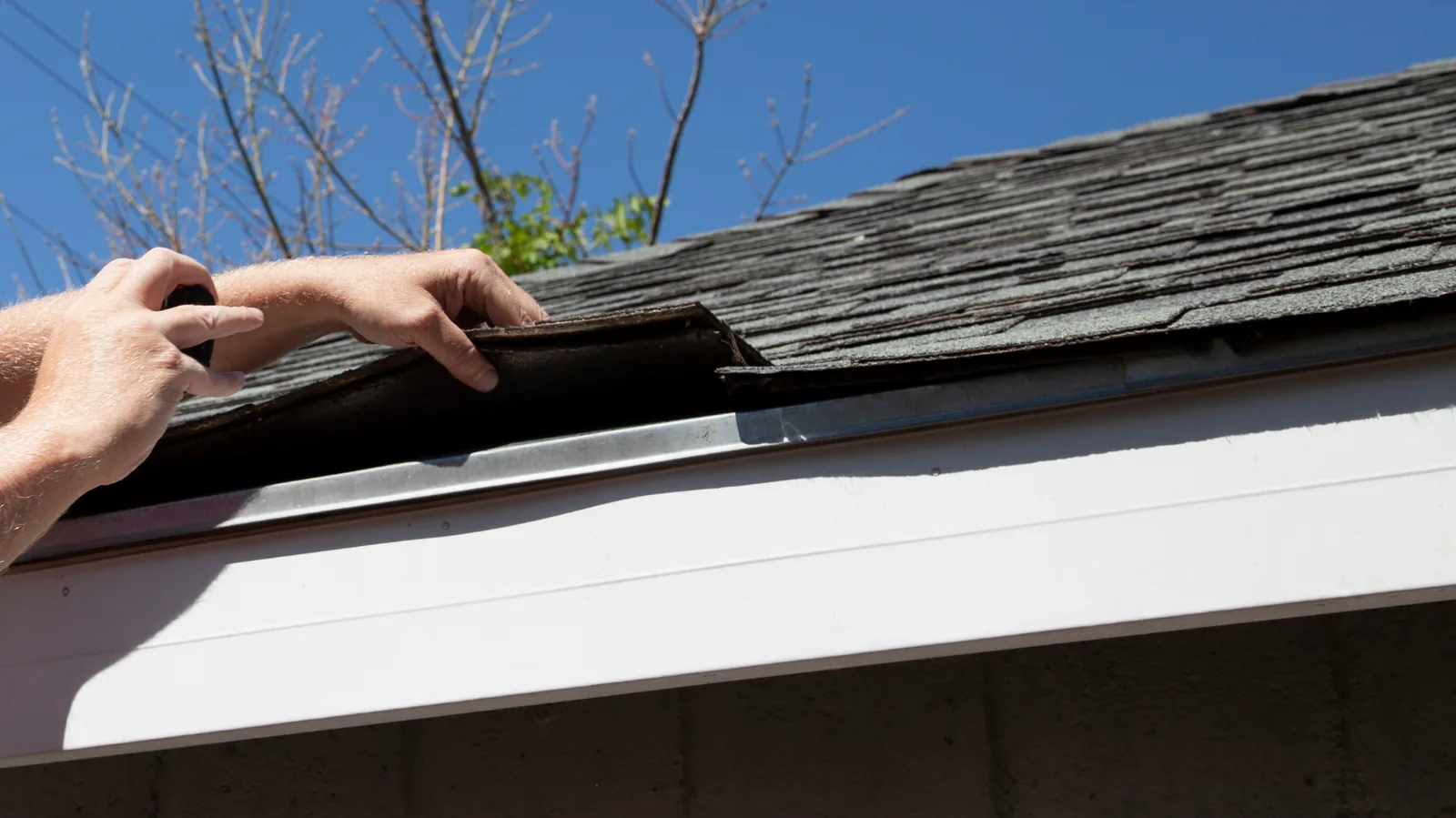
Tell the roofer whether the stain followed every rain or only a particular event. Wind direction, the time between rain and the visible mark, and any repeat wetting can help describe the pattern. Previous roof work near the area is useful context as well.
A dry day does not erase the question. Material condition and signs of earlier water movement can still help identify where the connection failed. Conversely, a water mark can have another building source, so the investigation should keep the actual evidence in view.
The useful next step is at the entry point
Take any useful photographs from safe ground level or indoors. Keep away from a bulging ceiling and water around electrical fixtures. You can share what you noticed without going onto the roof.
Once the entry path is understood, roof leak repair addresses the failed detail and the surrounding material it must join. Restoring the interior finish then follows the work needed to stop the water.
Start with the roof above the stain
Share what changed after the rain. A free inspection can help connect the indoor sign to the roof detail that needs attention.
Call (469) 523-0520